
Sunday, May 6, 2012
Captain Planet
Though it was first discovered by Ben Franklin when he flew that kite, atmospheric energy was abandoned long ago as a viable source of cheap, renewable electricity. Occasionally, researchers revisit the idea, which is typically presented as something like a weather balloon with a long cable attached to it. This is potentially very portable. One company claims to have workable patents, but every article I could find about them has the same information, as if the journalists were instructed to stick solely to the press release. However, I am interested in renewable energy, so I made a handy chart of options:


Tuesday, April 24, 2012
Documentaries to Watch
Carbon Nation, an 80 minute documentary with cute, poppy graphics, highlights a few American businesses that are leading the charge against climate change. The idea is that if going green can be shown to be lucrative, then society will follow. The filmmakers propose several thoughtful ideas that would help create jobs and decrease dependency on fossil fuels:

Check out Carbon Nation for more surprising, creative ways people are making money while saving the world. It's available on Netflix.
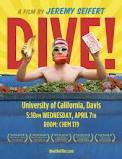
Other recommended films:
- After showing a successful wind farm in Roscoe, Texas, the filmmakers suggest that our empty automobile factories could be converted to wind turbine factories.
- The documentary highlights Dan Nolan's energy efficiency task movement, which uses foam insulation to decrease air-conditioning in military tent installations in the dessert, and looks to the future, when the Department of Defense may use wind turbines and solar power to create self-powering domes so that soldiers don't have to risk their lives to transport oil to the front lines. Some believe if the military adopts this technology, the research will help make its use cheaper and more acceptable to civilians.
- Now some drivers are using external power units to reduce idling in long-haul trucking. The filmmakers believe universal implementation would reduce carbon emissions by 11 million tons/year and save 1 billion gallons of fuel per year.
- Algae ponds in Anthony, TX. Just one acre can produce 5,000 gal of oil, which may be used to create airplane fuel. Though expensive now, it could be viable with more research and use.
- A new industry is cropping up around energy efficient buildings. Between retrofitting old and building better new ones, the filmmakers think we could use up to a third less energy as a result. This also creates many new US jobs because buildings can't be shipped to foreign nations for this service.
- Feeding the electricity from an electric hybrid back into the electric grid for high-use days. This way, we can actually store extra electricity instead of creating large power plants designed for peak periods.


Check out Carbon Nation for more surprising, creative ways people are making money while saving the world. It's available on Netflix.
Other recommended films:
- Dive! Living Off America's Waste, a radical approach to fighting food waste. It'll change your view of trash.
- Blue Gold: World Water Wars, a scary look at our water supply. Are you ok with foreign companies owning your city's water utilities?
- 10 MPH. The scooters are not fast, exciting, or cool, but they are electric and they did make it all the way across the country. Will they ever catch on?
Sunday, April 22, 2012
I put that in my mouth?

If you still don't want to quit, try www.Project7.com, which plants 1 fruit tree for every tube of gum you buy. Oddly, the gum tastes like pine trees.
Saturday, April 21, 2012
Traveling Sustainably: Plains, Trains, Automobiles, Scooters & Bikes [Part 2]
Destination: San Francisco, CA
Departure: Atlanta, GA
Distance: ~2,500 mi
CO2 Emissions
While CO2 is not the only greenhouse gas, it is the largest in quantity in our atmosphere and most widely tracked.
Let's say I double my calorie intake for the trip because I'm using more calories and exercise makes me hungry. I would increase from 1,500 to 3,000 calories per day. I estimate that 10 % of my calories come from dairy, and the remaining are equally divided among protein, grains, vegetables, and fruit. Using estimates from Planet Green (where grains, fruit, and veggies emit about 3-4 g CO2 per equivalent calorie, red meat 11, fish 8, dairy 6.5, and poultry 6) and assuming I alternate between meats to average 8 g CO2 per equivalent calorie for protein, I can calculate:
1,500 * [(.1 * 6.5) dairy + (.225 * 8) protein + (.675 * 3.5) grains/fruit/veg] = 8.7 additional kg of CO2
If I bicycled an average of 80 miles a day, the trip would take 32 days and my additional CO2 impact would be 278.4 kg (613.8 lbs) more than my normal use.
Using estimates and data by Matthew McDermott, I created this graph:

The Prius assumes 4 passengers and the Car assumes 1 passenger and 22 MPG, to create a picture of the best and worst case scenario for a car. A Scoot is a rechargeable, single-passenger electric scooter. Looks like the electric scooter wins again!
Infrastructure
When considering the environmental impact of traveling, one has to consider the setup necessary to make that trip possible. For example, the materials to make the car, the road, and parking lots. This can be said for trains and planes too, which do have a higher cost of infrastructure per passenger, as suggested in this Slate.com article. NewScientist.com notes that "more than half of the life-cycle emissions from rail come not from the engines' exhausts, but infrastructure development, such as station building and track laying, and providing power to stations, lit parking lots and escalators." Even electric scooters use roads, have to be charged every 30-65 miles, need replacement batteries, and only last an average of 10 years with "normal" use.
When it comes to infrastructure, bikes are the clear winner. They take fewer materials and energy to build, operate, and maintain and can be ridden without roads. Plus, they're really fun!
Conclusion
 Though a bike or electric scooter are by far the slowest options available for cross-country travel, they are the most preferable if I want to minimize the cost to the environment. As a bike lover, I choose to plan a self-propelled trip and keep a more sustainable diet on the trip to balance the carbon and fossil fuel cost of my extra food intake.
Departure: Atlanta, GA
Distance: ~2,500 mi
CO2 Emissions
While CO2 is not the only greenhouse gas, it is the largest in quantity in our atmosphere and most widely tracked.
Let's say I double my calorie intake for the trip because I'm using more calories and exercise makes me hungry. I would increase from 1,500 to 3,000 calories per day. I estimate that 10 % of my calories come from dairy, and the remaining are equally divided among protein, grains, vegetables, and fruit. Using estimates from Planet Green (where grains, fruit, and veggies emit about 3-4 g CO2 per equivalent calorie, red meat 11, fish 8, dairy 6.5, and poultry 6) and assuming I alternate between meats to average 8 g CO2 per equivalent calorie for protein, I can calculate:
1,500 * [(.1 * 6.5) dairy + (.225 * 8) protein + (.675 * 3.5) grains/fruit/veg] = 8.7 additional kg of CO2
If I bicycled an average of 80 miles a day, the trip would take 32 days and my additional CO2 impact would be 278.4 kg (613.8 lbs) more than my normal use.
Using estimates and data by Matthew McDermott, I created this graph:

The Prius assumes 4 passengers and the Car assumes 1 passenger and 22 MPG, to create a picture of the best and worst case scenario for a car. A Scoot is a rechargeable, single-passenger electric scooter. Looks like the electric scooter wins again!
Infrastructure
When considering the environmental impact of traveling, one has to consider the setup necessary to make that trip possible. For example, the materials to make the car, the road, and parking lots. This can be said for trains and planes too, which do have a higher cost of infrastructure per passenger, as suggested in this Slate.com article. NewScientist.com notes that "more than half of the life-cycle emissions from rail come not from the engines' exhausts, but infrastructure development, such as station building and track laying, and providing power to stations, lit parking lots and escalators." Even electric scooters use roads, have to be charged every 30-65 miles, need replacement batteries, and only last an average of 10 years with "normal" use.
When it comes to infrastructure, bikes are the clear winner. They take fewer materials and energy to build, operate, and maintain and can be ridden without roads. Plus, they're really fun!
Conclusion
 Though a bike or electric scooter are by far the slowest options available for cross-country travel, they are the most preferable if I want to minimize the cost to the environment. As a bike lover, I choose to plan a self-propelled trip and keep a more sustainable diet on the trip to balance the carbon and fossil fuel cost of my extra food intake.
Friday, April 20, 2012
Traveling Sustainably: Plains, Trains, Automobiles, Scooters & Bikes [Part 1]
This summer, I'm interested in taking a trip. But what would be the best way to travel if I want to minimize my environmental impact? (Ignoring money and time.)
Departure: Atlanta, GA
Destination: San Francisco, CA
Distance: 2463 (round up to 2500 for travel to Atlanta from Gainesville, GA)
MPG Estimates
It seems funny to think of human-powered vehicles as having a miles per gallon value, but simple calculation can convert your calorie intake into just that. Brad Templeton estimates that because US agriculture uses about 400 gasoline-gallon equivalents per American annually; this is about 10 calories for every calorie of food, and 4 times as much for heavy beef eaters. Therefore, he calculates that a bicyclist with an average diet is getting the equivalent of 85 miles per gallon of fossil fuel. See his calculations. However, I would be adding weight to my bicycle and biking long distances daily, which may increase my calorie consumption. As a quick estimate, if I used 50 % more calories, I might get 63 miles per gallon.
After seeing the movie Kalifornia, I don't plan on looking for strangers to share the ride, but if I can get a friend to join me in my car, we could get 40 passenger MPG (at 20 vehicle MPG- I know, pretty bad!). Renting a Prius might net me around 100 passenger MPG with 2 of us. Compare this to the following chart:
Looks like biking would be in the green on the chart, but maybe I should be shopping for an electric scooter.
Fossil fuel use in agriculture/how biking produces emissions:
Tomorrow: Part 2, CO2 emissions
Departure: Atlanta, GA
Destination: San Francisco, CA
Distance: 2463 (round up to 2500 for travel to Atlanta from Gainesville, GA)
MPG Estimates
It seems funny to think of human-powered vehicles as having a miles per gallon value, but simple calculation can convert your calorie intake into just that. Brad Templeton estimates that because US agriculture uses about 400 gasoline-gallon equivalents per American annually; this is about 10 calories for every calorie of food, and 4 times as much for heavy beef eaters. Therefore, he calculates that a bicyclist with an average diet is getting the equivalent of 85 miles per gallon of fossil fuel. See his calculations. However, I would be adding weight to my bicycle and biking long distances daily, which may increase my calorie consumption. As a quick estimate, if I used 50 % more calories, I might get 63 miles per gallon.
After seeing the movie Kalifornia, I don't plan on looking for strangers to share the ride, but if I can get a friend to join me in my car, we could get 40 passenger MPG (at 20 vehicle MPG- I know, pretty bad!). Renting a Prius might net me around 100 passenger MPG with 2 of us. Compare this to the following chart:
 |
| Source: http://www.templetons.com/brad/transit-myth.html#mpg |
Fossil fuel use in agriculture/how biking produces emissions:
- “Eating Fossil Fuels” by Dale Allen Pfeiffer
- "Fossil Fuel and Energy Use" at Sustainable Table
- "The Inefficiency of Local Food" at Freakonomics
Tomorrow: Part 2, CO2 emissions
Saturday, April 14, 2012
On Loving Material Things
In a 2009 exhibit of contemporary Mexican art at the Nasher Museum, I saw a 20 minute film by Damian Ortega. "Escarabajo," 2005, is about driving the artist's beloved Volkswagen Beetle along picturesque countryside to a Beetle graveyard. Many times going to a museum leaves one too overwhelmed with images to really be affected by a specific work, but this piece has stayed with me, years later. I think it's because the idea of ceremonially burying an inanimate object is so odd. After all, we're not supposed to get attached to our purchases. They serve their function, then we throw them away or sell them. But maybe if we treasured our possessions, we wouldn't be so quick to fill up landfills and consume more goods? Maybe an old car is not a dying liability, but a trusted companion that has carried one through the best times. And if it's too far gone, maybe it deserves a few words.
Incidentally, the Volkswagen Beetle has inspired many other artists:
Incidentally, the Volkswagen Beetle has inspired many other artists:
Thursday, April 12, 2012
The Apple Clones
 |
| Are they really so bad? |
In An Apple a Day, Dr. Joe
Schwarcz opens with a note warning people not to worry about the mere
presence of a chemical, but rather the concentration. In other
words, how much you have of a compound in your blood is a better
indicator of your health and future. He goes on to note that apples
naturally contain acetone (also used in nail polish remover),
isopropanol (rubbing alcohol), and even some cyanide (rat poison),
yet in trace amounts. Schwarcz emphasizes that apples have 300
other “naturally occuring compounds, and whatever effect the fruit
has on our health is a reflection of all of these.” A pro-apple
example highlights a Cornell team's series of studies that used apple
extract to inhibit cancer sells in liver, colon, and breast tissue.
Schwarcz also notes that many people
easily become angry when they hear about “chemicals” in their
food supply, even if the general scientific consensus disagrees.
Food scares are often propagated by news stories that misinterpret a
new study or exaggerate the threat for effect. In fact, a strong
majority of pesticides in a person's diet are naturally synthesized
by each plant itself! Furthermore, Schwarcz insists that regulatory
agencies are rigorous in their testing of new pesticides and
extremely cautious in allowing their use. He says that some groups
are “fond of coming up with lists of pesticides found on fruits and
vegetables and using these to make recommendations about adjusting
eating habits to lower pesticide intake.” One specific list he
sites is the Environmental Working Group (EWG)'s Dirty Dozen. In Schwarcz's opinion, the benefits of higher yields,
year-round availability, and cancer-preventive properties of fresh
produce are great compared to the small risks of trace pesticide
residue.
Oddly enough, the EWG bases its list
ranking on the US Department of Agriculture's Pesticide Data Program.
The project was started in 1991 to monitor the US food supply for
pesticide residues, and tests fresh, canned, and frozen produce,
grains, juices, and even water supply at random. Therefore, the
government is not only deciding which pesticides are allowable, but
also carefully making sure they are used appropriately. In fact, the
USDA has found that only 0.3% of samples exceeded levels allowed bythe Environmental Protection Agency. That seems like a great number,
but the EWG wants expanded testing, perhaps believing the results
wouldn't be so hopeful if the USDA were more watchful of the food
children prefer.
Fresh
apples, a lunchbox staple, did frequently test positive for Azinphos
methyl, Captan, Diphenylamine, Phosmet, and Thiabendazole in the PDP tests. Apple
sauce and juice had smaller traces of pesticide residue.
(Incindentally, pesticide residue in produce from other countries is
often greater, with different compounds in use. However, most apples
are American-grown.) Captan is thought to inhibit estrogen action,
which earns it a mention in this review on the larger impact of
endocrine-disrupting pesticides. Children are more susceptible to
this group of chemicals, and their effects may not be seen until
adulthood. The article suggests possibly using “natural”
pesticides, but offers no other solutions and yields that these may
be harmful to humans while not always being effective enough against pests.
From reading these conflicting views, I've come to the following conclusions:
- There are likely more serious environmental health risks than apples. However, apple sauce is a good bet for those who want an additional factor of safety but still like the cheap and convenient fruit.
- A serious opponent of pesticide use must provide a rational alternative that can feed a booming world population.
- Agriculture is dangerous, and the workers themselves should earn more concern than our own, slightly-dusty lunch.For more reading:
Subscribe to:
Posts (Atom)